The word daily can make a supplement feel like a small housekeeping decision. Put the bottle beside breakfast, remember it, and move on. A better first step is to pause long enough to know what problem you are trying to address and whether the product’s instructions fit the circumstances of your day.
These five questions draw on public labels and health guidance checked September 26, 2026. They are preparation for a conversation, not a screening test or permission to begin. No checklist on a review site can decide whether a supplement or laxative is suitable for an individual.
1. What is the actual reason for considering fiber?
A person reviewing food intake may be asking a nutrition question. Someone with constipation after a medication change may be asking about an adverse effect. Someone with persistent pain or bleeding needs a different level of attention. Calling all three situations “needing more fiber” skips the information that distinguishes them.
NIDDK’s treatment guidance describes several approaches to constipation and advises discussing medicines or supplements that might contribute. It specifically cautions against independently changing or stopping them. A bottle purchase should not substitute for that review or become a reason to alter prescribed treatment.
Before a visit, describe the concern in ordinary language, including when it began and what has changed. Keep the details private and share them with the appropriate care professional. This site’s routine notebook does not collect symptoms or personal health information; it only organizes public product questions.
2. Which exact product are you considering?
Bring the actual name, ingredients, facts panel, warnings and directions. A brand may sell powders, caplets and several capsule formulas. The Citrucel review, for example, concerns a methylcellulose OTC caplet rather than a psyllium capsule. A general recommendation about “fiber” does not automatically specify one of those preparations.
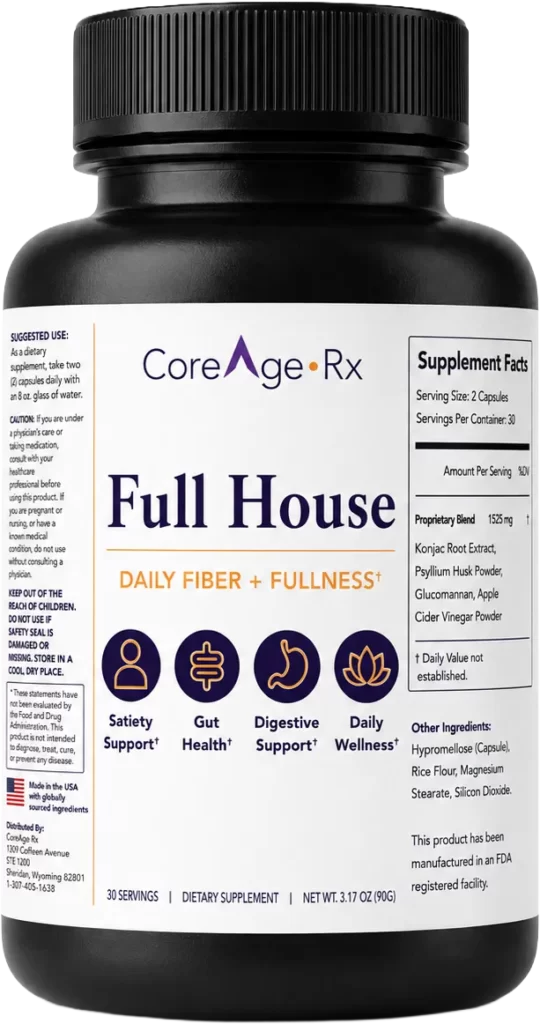
The Full House review illustrates another kind of uncertainty. Its label reports a proprietary blend total without individual ingredient quantities or a distinct dietary fiber amount. If the care conversation depends on one of those amounts, the manufacturer may need to supply information the public image does not establish.
A photo can help preserve the product identity, but it needs to be clear and current. Include both the facts panel and directions, not just the front of the bottle. If a delivered package differs from the reviewed image, use the package’s actual details when asking for advice.
3. Can the liquid and swallowing instructions be followed?
Several fiber products require a full glass of liquid with administration. MedlinePlus explains that psyllium absorbs liquid, and its precautions include swallowing difficulty and intestinal blockage. A capsule’s convenience does not remove the relevance of those conditions.
If you have a prescribed fluid limit, difficulty swallowing or a history that makes a label warning relevant, raise that before use. Do not resolve the issue by reducing the required liquid, opening a capsule or borrowing another product’s administration method. Those changes need product-specific professional guidance.
A practical question can be as simple as where the required liquid will be available on a workday or a trip. The away-from-home guide covers planning and label access. It does not prescribe a time of day or assume that every schedule can accommodate every product.
4. What else is taken, and who will check the combination?
A supplement can be relevant to medicine timing even when it is sold without a prescription. MedlinePlus identifies specific psyllium restrictions around digoxin, salicylates such as aspirin and nitrofurantoin. Manufacturer labels may contain shorter general spacing language, which should not override medicine-specific advice.
Bring prescription medicines, over-the-counter products and other supplements into the same review. Tell the pharmacist which exact fiber product you are considering, including all ingredients in a blend. A timetable based only on the word psyllium may miss the other ingredients or the medicine’s own instructions.
This is not a request to enter that information into our website. The notebook has no medicine field, dose field or health-history form. Its role is to remind you which source details might be useful in a private conversation with a qualified professional.
5. What is the follow-up plan if the question persists?
A routine should not make persistent symptoms easier to ignore. The Citrucel label instructs stopping and asking a doctor if constipation lasts more than seven days or rectal bleeding occurs. Those are product-specific boundaries, not a rule that every symptom can safely wait a week.
NIDDK’s warning guidance includes concerning symptoms that need prompt assessment. Ask the care professional what to watch for, when to follow up and which instructions apply to the chosen preparation. The when-to-call guide keeps that distinction visible.
A purchase is a separate decision
Once the product question is clearer, check the actual order: count, selected plan, shipping, total and future charges. An advertised monthly offer does not establish an individual need for monthly delivery. A large bottle does not authorize a longer period of self-treatment than the label or clinician advises.
The comparison of daily fiber options keeps these commercial details next to the product records. CoreAge receives sponsored first placement; it does not receive an exemption from unanswered questions. You may leave the comparison with a product to discuss, a request for more information or a decision not to add anything yet.
Sources and notes
Checked September 26, 2026. A new access date does not mean a source received a new clinical review.
- MedlinePlus Psyllium
Public health / medication context. Liquid requirements, precautions and medicine-specific restrictions. A general psyllium monograph does not evaluate a multi-ingredient finished supplement.
- NIDDK Treatment for Constipation
Public health / care context. Food, activity and clinician-guided treatment; advises against independently changing medicines. Not an individual care plan.
- NIDDK Symptoms and Causes of Constipation
Public health / symptom boundaries. Persistent symptoms and warning signs needing professional assessment. Last reviewed May 2018.
- Full House label image
Manufacturer / directly inspected label. Two capsules; 1,525mg proprietary blend. No separate dietary fiber or individual blend ingredient quantities visible. No finished-formula trial verified.
- Citrucel current manufacturer Drug Facts
Manufacturer / current linked PDF. 500mg methylcellulose per caplet; bulk-forming laxative for occasional constipation. Full liquid, choking, symptom and storage instructions are in this label. Label directions are not personalized advice.